Eversheds Sutherland Bitāns
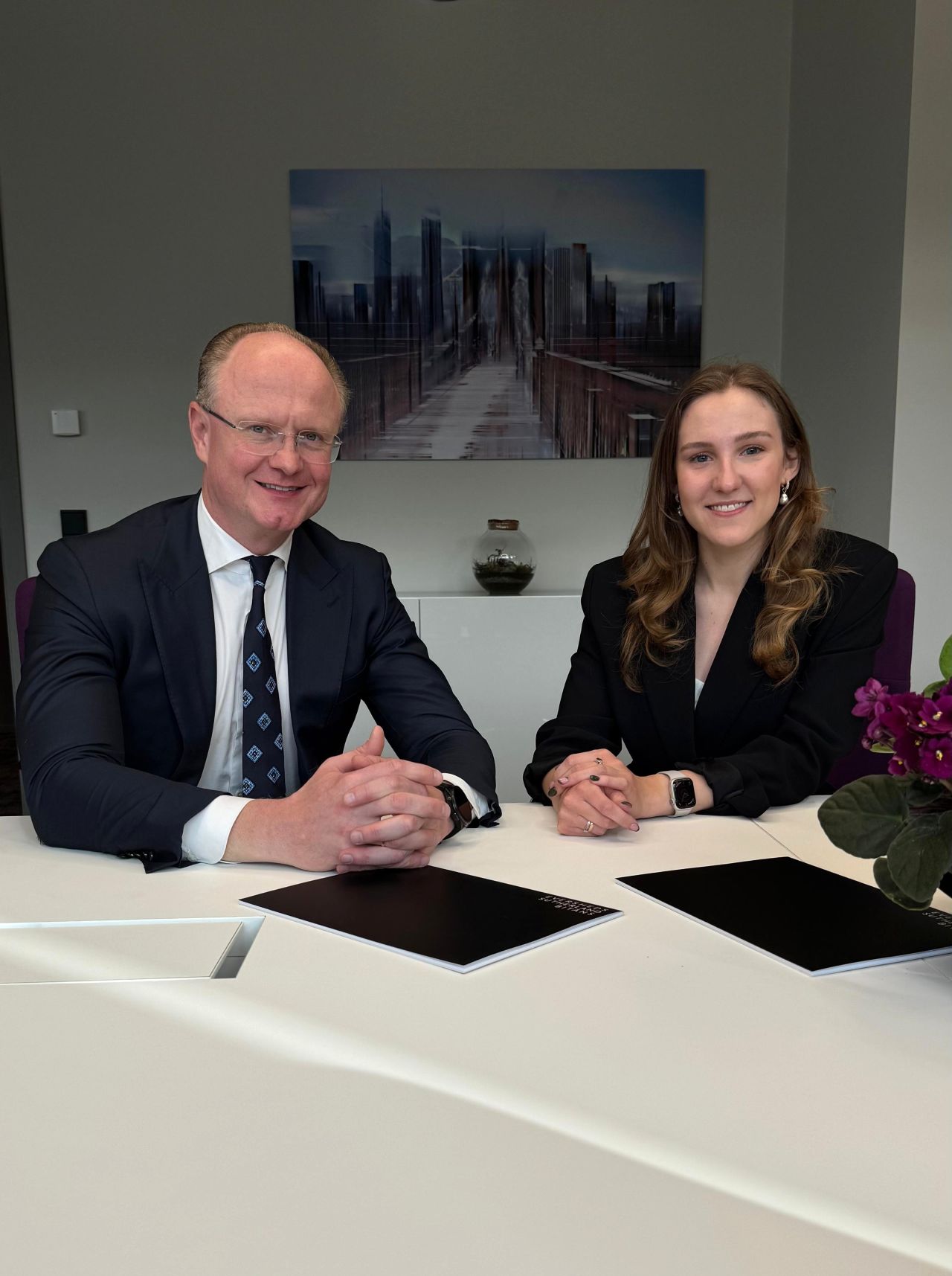
Māris Vainovskis, Senior Partner
Māris Vainovskis, Senior Partner
Marta Rudzīte, Co-Head of Capital Markets practice group
In Latvia, a significant amount of private funds has been accumulated, but they are mostly held in deposits and do not contribute to economic development. This not only results in unrealised welfare potential for the population, but also hinders economic growth, as the capital could be invested in real projects.
When examining the structure of household savings across the Baltic states, significant differences can be observed. Estonian households allocate 72% to investments in shares and investment funds, which is among the highest levels in Europe. Meanwhile, in Latvia and Lithuania, deposits have traditionally made up the larger share. To change this trend, it is necessary to offer private investors accessible and understandable investment products that encourage individuals to direct their savings into meaningful investments.
It is clear that, just as elsewhere in Europe, people's investment habits do not emerge spontaneously, they require structured initiatives. Sweden is a striking example of how favourable tax conditions for investments and easily accessible investment products have created an environment in which households invest a significant majority of their savings in financial instruments (90%). One of the initiatives in Sweden was the “Allemansfonder” funds, which initially offered a regime where profits were not taxed, thereby encouraging private individuals to invest in funds. Even after this regime was abolished, people's habits of investing in funds remained and continued to develop.
Investment funds are one of the cornerstones of today's financial markets - they allow private investors to access various sectors, diversify risks and invest in targeted projects. Thematic fund segments are currently experiencing especially rapid growth worldwide: defence and security technology funds, sustainable energy and climate solution funds, residential development funds, cyber security, artificial intelligence and biotechnology funds, multi-asset funds, as well as various digital asset solutions. However, in Latvia, the range of funds available to private investors is still largely focused on foreign markets - they track global indexes or invest in international companies, meaning that a significant portion of our investors’ capital works for the benefit of other countries’ economies. Accordingly, a key question is how to achieve the opposite direction: how to create instruments that would allow this capital to be redirected back into the development of the local market and to finance Latvian and Baltic projects that truly need it.
REAL ESTATE FUNDS
Two investment funds are currently listed on the Baltic stock exchanges – EfTEN Real Estate Fund III and Baltic Horizon Fund – both of which invest in real estate projects. Exchange-traded funds available to private investors that invest in real estate are instruments that could become a new source of capital for energy efficiency, industrial projects, residential stock modernization, and other strategic development areas. Globally, real estate funds have widely used the REIT (Real Estate Investment Trust) regime, which further develops this fund model by defining the investment structure and profit distribution rules to ensure transparency and clear conditions for investors. Incorporating this type of fund into national fund regulations also helps foreign investors navigate the market by providing an internationally recognized framework for investment opportunities. Elsewhere in Europe, the REIT regime has already proven its ability to mobilise local capital – for example, in France, Finland, Ireland and Germany, REITs are listed on the stock exchange and are typically required to invest at least 80-90% of their assets in real estate and to pay out most of their profits in dividends, thus creating transparent, understandable, liquid and reliable investment instruments that encourage investor involvement and investment in the local market. Countries structure REIT regimes differently, with varying requirements for legal form, listing, asset type and proportion, and profit distribution, therefore, REITs can be either very strictly regulated or flexibly adapted to the specific needs of a country’s market. Tax regimes also vary between countries. In some places, REITs are fully exempt from corporate income tax, in others, the exemption applies only to certain types of real estate–related income, while in several jurisdictions, tax benefits are granted only if the REIT distributes a specified portion of its profits as dividends.
These different approaches confirm that REITs are not just a technical regulatory solution. They are instruments chosen at the national level that help purposefully attract private and institutional capital to development projects - ranging from residential stock renovation and industrial facilities to energy efficiency and public infrastructure. This is precisely why the experience of several countries shows that the introduction of REITs has become a significant stage in the development of the capital market, promoting both public involvement and foreign investor interest.
ACCESS TO INTERNATIONAL CAPITAL
Although REIT-type funds offer a very practical way to activate local capital and finance development projects right here in Latvia, they are only one of the instruments that can help our capital market become more dynamic and attractive to investors. Another important direction is to increase Latvia's visibility and accessibility in international stock indexes.
MSCI (Morgan Stanley Capital International) is one of the world's most influential index providers, whose classifications and indexes determine the direction of global investment flows. MSCI compiles market indexes covering more than 70 countries, and these indexes form the basis for the majority of passively managed investment funds, exchange-traded funds (ETFs) and pension plans. If a country or company is included in the MSCI index, it ends up in the investment portfolios of thousands of funds around the world. Conversely, if a country is not included in the index, it remains outside the attention of global investors, thereby limiting the available capital.
In recent years, MSCI has paid increased attention to the Baltic region. In 2023, the MSCI Baltics index was created. The creation of this Baltic index is an important step towards greater international fund involvement in the region, allowing investors to assess the region as a single economic area with similar regulations, capital market structure and company profiles. However, although the MSCI Baltics Index is a significant milestone, its impact is still limited, mainly because the Baltic market is currently considered small and less developed (Frontier Market) in the MSCI classification and therefore has a lower priority in global passive investment strategies. Therefore, it is important for Latvia and the region as a whole to continue working on improving market quality, increasing liquidity and the number of companies listed on the stock exchange in order to move up in this classification in the future and attract significantly greater international capital flows.
It is critically important for the Latvian economy to develop a strong capital market so that private savings can become a real driver of growth. Harnessing the potential of investment funds can be one of the most effective tools, but they are only part of a broader solution. For sustainable growth of the capital market, it is essential to increase the number of listed companies by using the capital market to support the growth of both private and state-owned enterprises, as this will ensure greater market liquidity, attract investors, and create opportunities to more effectively finance development of Latvia and the Baltic region.
When examining the structure of household savings across the Baltic states, significant differences can be observed. Estonian households allocate 72% to investments in shares and investment funds, which is among the highest levels in Europe. Meanwhile, in Latvia and Lithuania, deposits have traditionally made up the larger share. To change this trend, it is necessary to offer private investors accessible and understandable investment products that encourage individuals to direct their savings into meaningful investments.
It is clear that, just as elsewhere in Europe, people's investment habits do not emerge spontaneously, they require structured initiatives. Sweden is a striking example of how favourable tax conditions for investments and easily accessible investment products have created an environment in which households invest a significant majority of their savings in financial instruments (90%). One of the initiatives in Sweden was the “Allemansfonder” funds, which initially offered a regime where profits were not taxed, thereby encouraging private individuals to invest in funds. Even after this regime was abolished, people's habits of investing in funds remained and continued to develop.
Investment funds are one of the cornerstones of today's financial markets - they allow private investors to access various sectors, diversify risks and invest in targeted projects. Thematic fund segments are currently experiencing especially rapid growth worldwide: defence and security technology funds, sustainable energy and climate solution funds, residential development funds, cyber security, artificial intelligence and biotechnology funds, multi-asset funds, as well as various digital asset solutions. However, in Latvia, the range of funds available to private investors is still largely focused on foreign markets - they track global indexes or invest in international companies, meaning that a significant portion of our investors’ capital works for the benefit of other countries’ economies. Accordingly, a key question is how to achieve the opposite direction: how to create instruments that would allow this capital to be redirected back into the development of the local market and to finance Latvian and Baltic projects that truly need it.
REAL ESTATE FUNDS
Two investment funds are currently listed on the Baltic stock exchanges – EfTEN Real Estate Fund III and Baltic Horizon Fund – both of which invest in real estate projects. Exchange-traded funds available to private investors that invest in real estate are instruments that could become a new source of capital for energy efficiency, industrial projects, residential stock modernization, and other strategic development areas. Globally, real estate funds have widely used the REIT (Real Estate Investment Trust) regime, which further develops this fund model by defining the investment structure and profit distribution rules to ensure transparency and clear conditions for investors. Incorporating this type of fund into national fund regulations also helps foreign investors navigate the market by providing an internationally recognized framework for investment opportunities. Elsewhere in Europe, the REIT regime has already proven its ability to mobilise local capital – for example, in France, Finland, Ireland and Germany, REITs are listed on the stock exchange and are typically required to invest at least 80-90% of their assets in real estate and to pay out most of their profits in dividends, thus creating transparent, understandable, liquid and reliable investment instruments that encourage investor involvement and investment in the local market. Countries structure REIT regimes differently, with varying requirements for legal form, listing, asset type and proportion, and profit distribution, therefore, REITs can be either very strictly regulated or flexibly adapted to the specific needs of a country’s market. Tax regimes also vary between countries. In some places, REITs are fully exempt from corporate income tax, in others, the exemption applies only to certain types of real estate–related income, while in several jurisdictions, tax benefits are granted only if the REIT distributes a specified portion of its profits as dividends.
These different approaches confirm that REITs are not just a technical regulatory solution. They are instruments chosen at the national level that help purposefully attract private and institutional capital to development projects - ranging from residential stock renovation and industrial facilities to energy efficiency and public infrastructure. This is precisely why the experience of several countries shows that the introduction of REITs has become a significant stage in the development of the capital market, promoting both public involvement and foreign investor interest.
ACCESS TO INTERNATIONAL CAPITAL
Although REIT-type funds offer a very practical way to activate local capital and finance development projects right here in Latvia, they are only one of the instruments that can help our capital market become more dynamic and attractive to investors. Another important direction is to increase Latvia's visibility and accessibility in international stock indexes.
MSCI (Morgan Stanley Capital International) is one of the world's most influential index providers, whose classifications and indexes determine the direction of global investment flows. MSCI compiles market indexes covering more than 70 countries, and these indexes form the basis for the majority of passively managed investment funds, exchange-traded funds (ETFs) and pension plans. If a country or company is included in the MSCI index, it ends up in the investment portfolios of thousands of funds around the world. Conversely, if a country is not included in the index, it remains outside the attention of global investors, thereby limiting the available capital.
In recent years, MSCI has paid increased attention to the Baltic region. In 2023, the MSCI Baltics index was created. The creation of this Baltic index is an important step towards greater international fund involvement in the region, allowing investors to assess the region as a single economic area with similar regulations, capital market structure and company profiles. However, although the MSCI Baltics Index is a significant milestone, its impact is still limited, mainly because the Baltic market is currently considered small and less developed (Frontier Market) in the MSCI classification and therefore has a lower priority in global passive investment strategies. Therefore, it is important for Latvia and the region as a whole to continue working on improving market quality, increasing liquidity and the number of companies listed on the stock exchange in order to move up in this classification in the future and attract significantly greater international capital flows.
It is critically important for the Latvian economy to develop a strong capital market so that private savings can become a real driver of growth. Harnessing the potential of investment funds can be one of the most effective tools, but they are only part of a broader solution. For sustainable growth of the capital market, it is essential to increase the number of listed companies by using the capital market to support the growth of both private and state-owned enterprises, as this will ensure greater market liquidity, attract investors, and create opportunities to more effectively finance development of Latvia and the Baltic region.
